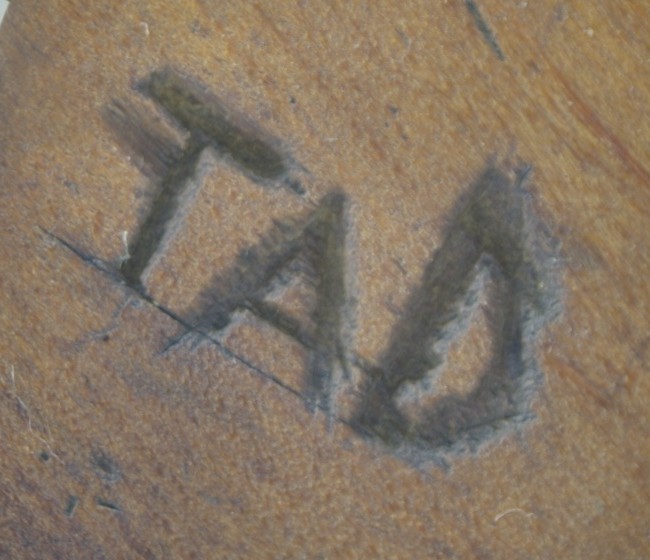
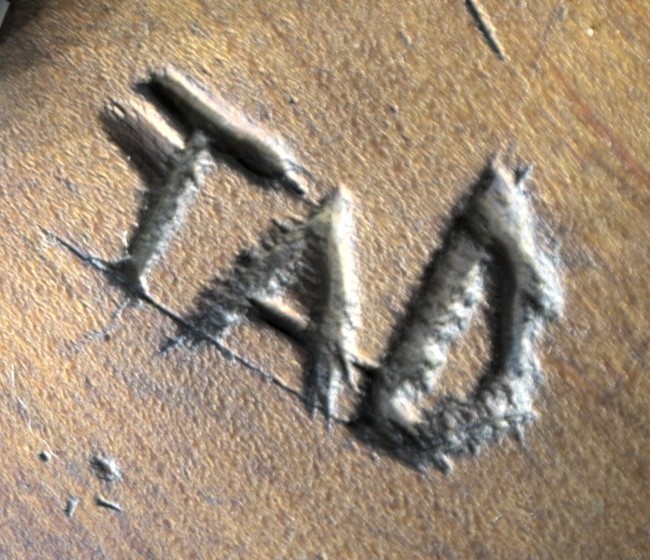
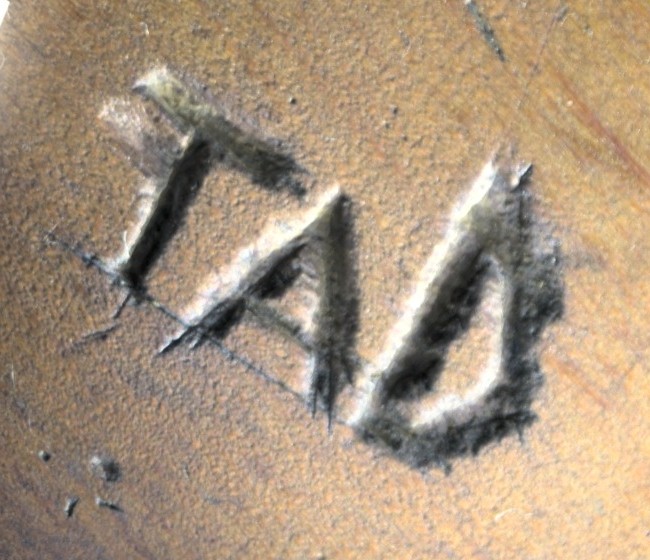
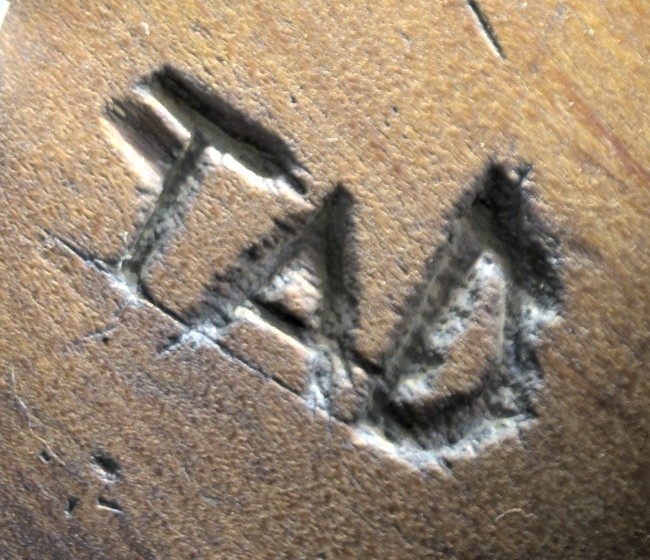
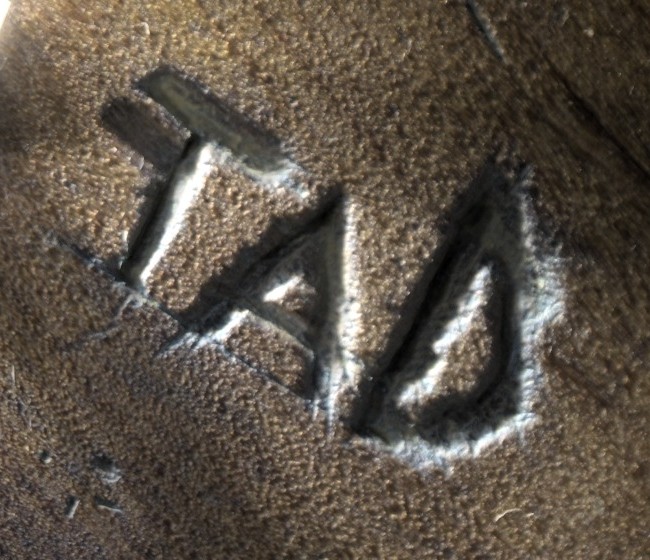
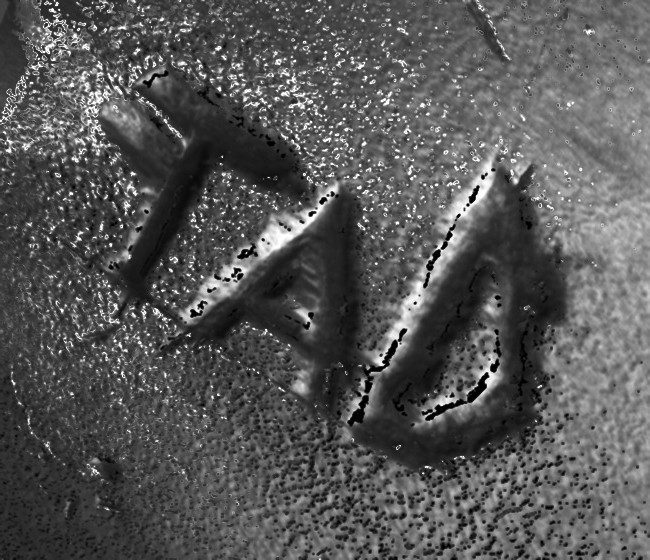
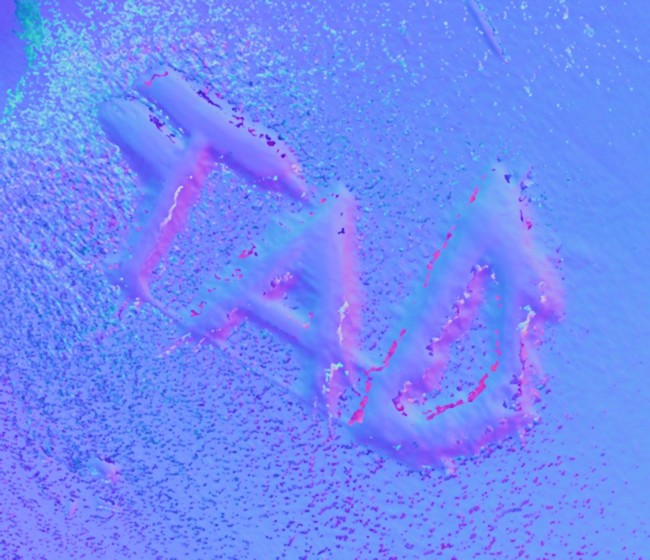
Reflectance transformation imaging (RTI) is a technique museums use to study carvings and inscriptions. The camera stays fixed on a tripod while a light is moved to a different low angle for each photo. A shiny ball in the frame records where the light was each time. Software then combines the photos so the surface can be re-lit from any direction, which brings out the depth and shape of the cuts.
For this set, 35 photos were taken in October 2026 and 30 were used. The other five had no clear highlight on the ball.
What it shows
The letters were cut as V-shaped knife strokes with angled walls and ragged, torn edges. A long, thin straight scratch runs from the top of the “A” past the “D,” and there are a few small dents nearby. Both are visible in ordinary photos too. The re-lighting did not reveal any hidden letters, initials, or other marks.